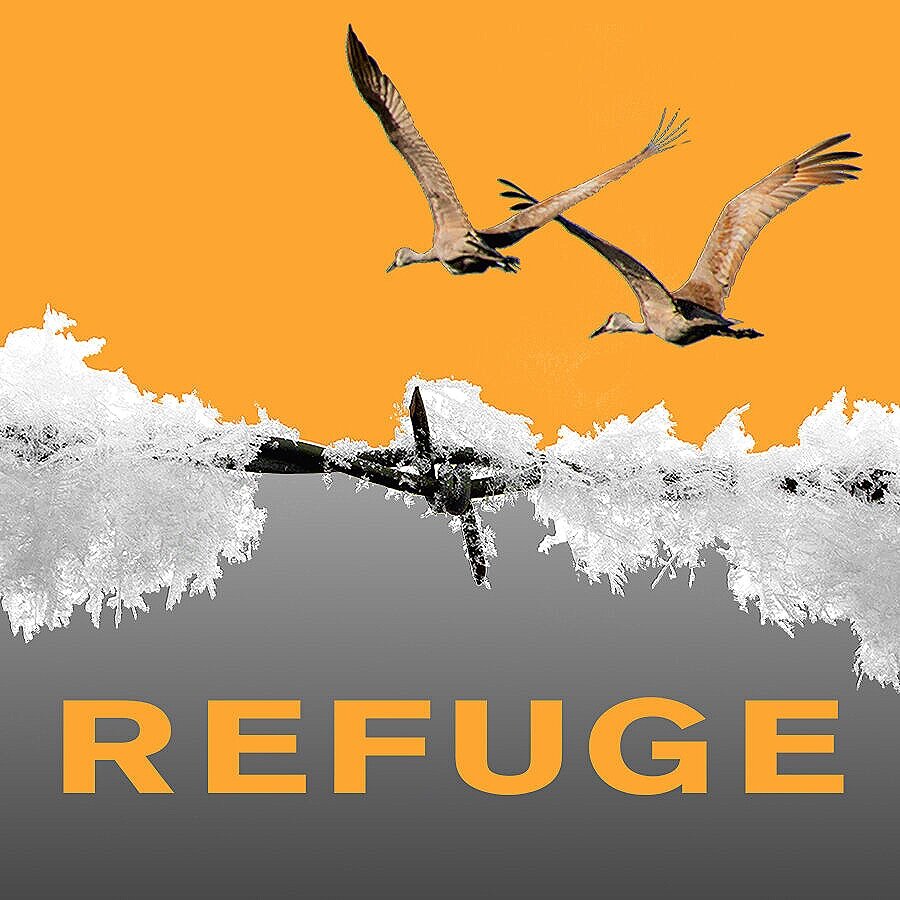
A seven-part documentary series

Land and identity at the sharpening edge of American discontent
The Film
Two Oregon cattle ranchers, father and son, face prison for public land arson, and a group of anti-government extremists swarm into the community and seize a nearby federal outpost in protest, launching a 41-day armed and deadly standoff. As the Ammon Bundy-led occupation unfolds, long-simmering tensions over land, identity, and authority re-ignite, splitting a frontier community. Told vividly and with emotional depth, Refuge traces a saga of protest and resistance, resilience and grit, revealing both the fraught legacy of the American West and the widening divides across a nation approaching a pivotal election—offering both cautionary tale and critical point of hope.
Episode Synopses & Run Times
-
Father-son cattle ranchers Dwight and Steven Hammond face prison for arson on public land deep in “Oregon’s Outback.”
Claiming government overreach, land-rights agitator Ammon Bundy pressures Harney County Sheriff Dave Ward, only recently sworn in, to intervene on their behalf. When Ward refuses, Bundy and self-styled militia supporters descend on the frontier community of Burns, mounting an intimidation campaign that escalates into what becomes a 41-day armed takeover of the nearby Malheur National Wildlife Refuge headquarters — a federal outpost Bundy rejects and vows to return to private hands.
-
Western myth clashes with a darker legacy. When Northern Paiute People resist encroaching 19th Century cattle barons and settlers, the US Army forces their mid-winter march to a distant reservation. Survivors return to Harney Valley a few years later but face poverty and discrimination as they rebuild lives in their homeland.
New disputes prompt governmental reshaping of the public domain, and an emerging environmental movement demands land-use reforms, deepening dissent.
Non-stop news coverage of the armed occupation captures global attention and reveals escalating tensions within the community. Burns Paiute Tribal Chair Charlotte Roderique rejects dialogue with occupiers.
Sheriff Ward leads a community meeting, providing much-needed catharsis for those like rancher Georgia Marshall — but fears quickly grow.
-
In 1930, Chicago-based timber company opens an enormous sawmill in Harney County predicting a 50-year timber supply. It boosts Harney County into decades-long prosperity. In 1980, though, the prediction came true; the mill shut down almost overnight, and the community was devastated. Nearly everyone blamed the government and environmentalists.
The Malheur National Wildlife Refuge, a world-renowned stopover for huge numbers of migrating birds along the Pacific Flyway, is plagued by conflict from its 1908 inception to the present fueling harsh anti-government resentment.
Burns High School Civics teacher Jake Thompson demands deeper classroom discourse during the occupation, helping students manage their reactions to the crisis.
Ammon Bundy and large cohort crash a crowded town hall meeting, and the community erupts in anger.
-
Local ranchers, conservationists, and federal agencies form an unlikely alliance to bridge long-contested views around public land. This collaboration is threatened by Ammon Bundy’s pledge to privatize public land, a viewpoint based on his narrow reading of the Constitution.
To widen support, Bundy and others depart for the next county, activating law enforcement’s plan for their arrests along an isolated mountain road. Seven surrender, but LaVoy Finicum, evading capture, is shot and killed by Oregon State Police.
Dozens of occupiers flee the refuge; neighboring residents fear retaliation. Hundreds of Bundy’s supports descend on the Harney County Courthouse to protest Finicum’s death matched by an exuberant local resistance.
-
Four frightened refuge holdouts remain, using heavy equipment to dig defensive trenches which threaten Native cultural sites. A tense, two-day FBI negotiation is livestreamed to 70,000 listeners and results in their safe surrender. The six-week ordeal’s conclusion promotes exhilaration and relief within the exhausted community.
Following plea bargains and some charges being dropped, 26 occupation defendants indicted on federal felony charges are pared to 11. Two trials are scheduled, and attorneys prepare for highly charged and complex cases.
While Finicum’s shooting by Oregon State Police is ruled justified, two initially unreported shots fired at his truck allegedly by a member of the FBI’s Hostage Rescue Team suggest a possible FBI coverup, leading to protests in Portland and beyond, and a federal indictment.
-
Spring signals renewal — the spectacular return of migrating birds to the Harney Basin and repair for the deeply wounded community.
A groundswell of civic engagement draws new primary election candidates and invigorates voters. The county fair showcases an abundant harvest and rebuilds recently-shattered relationships.
The first “Bundy” trial spans six weeks. Conspiracy, guns, and the limits of protest are examined. A last-minute twist propels the jury toward an unexpected verdict, climaxing with the courtroom arrest of Ammon Bundy’s attorney.
Harney County’s general election sees Sheriff Dave Ward vying for re-election as the nation awaits a new president.
Repeat visits by former occupiers, Finicum’s widow, and other Bundy supporters to a makeshift memorial at the site of Finicum’s death stirs still-raw emotions in the community.
-
The second “Bundy” trial prompts a reversal in Ammon Bundy’s testimony and prompts a different set of verdicts than in the first trial.
The acquittal of the FBI HRT agent’s over the unlawful discharge of his firearm at the traffic stop unsettles notions of government accountability on all sides in an era of widening public mistrust.
In July 2018, President Trump pardons Dwight and Steven Hammond, and they return home. In Burns, a reunion of former refuge occupiers celebrates the Hammond’s release but rekindles community anxieties yet again.
Growing civil unrest culminating in the 2021 US Capitol assault reveals an ever-more fracturing nation, but Harney County’s beacon of local leadership and a vanguard model for collaborative conservation inspire hope of a new and brighter chapter for the community — beyond extremism.
We are nearing the finish line but there’s still more work to do. Your tax-deductible contribution will help get us there. Thank you!
Comments About Refuge
“Wow! You have us hooked! The refuge occupation — that was just the beginning.”
“I forgot how much it hurt. And the rumblings are still there given the situation this nation is in. THANK YOU!”
“A deep dig into the Bundy occupation as a moment not only in high desert history but with national and international ramifications. It’s a cautionary tale as to what would unfold in that year’s (2016) election and beyond.”
“The entire cast in Refuge is authentic and deeply honest. They are people you’d like to know; conversations you’d like to sit in on.”
“Each episode has me at the edge of my seat. What happens next?”
“These were extraordinarily emotional times…and the tenor of that from the inside is what makes Refuge a real standout.”
Contact us: sue(at)hareinthegate.com or richard(at)hareinthegate.com